
Although allowing a budding chef to “stage” in a restaurant is a long-standing tradition, using an unpaid stage in California is recipe for a wage-and-hour claim.  In this article we explore how even a short shift creates long exposure for California restauranteurs. 

Allowing an individual to stage whether under the guise of a trial shift, working interview, or unpaid internship—raises acute wage-and-hour and liability concerns. In short, an unpaid stage is permissible in California only if the arrangement qualifies as a bona fide internship under the state’s stringent interpretation of the federal “primary beneficiary” framework, which California applies narrowly. To be lawful, the arrangement must primarily benefit the intern, not the restaurant. Continue Reading All Sizzle, No Safety Net: The Legal Risks of Restaurant Stages
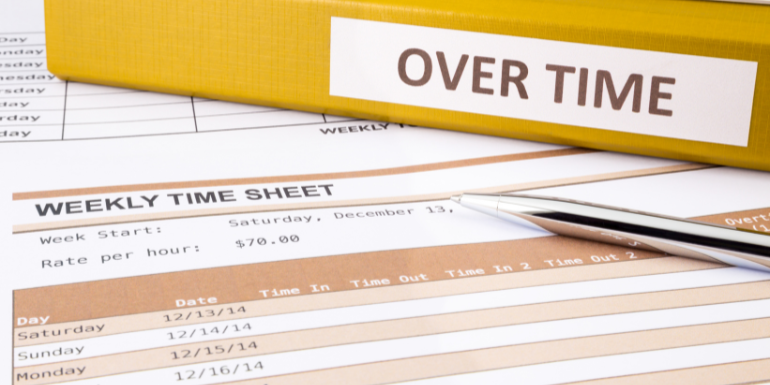
The One, Big, Beautiful Bill Act of 2025 (OBBBA) was signed into law on July 4, 2025. While its reach is broad, this article covers new employer tax reporting obligations. Under the OBBBA, employers must separately report qualified overtime compensation on employees’ Form W-2 and must report qualified tips and occupation codes for employees that customarily and regularly receive tips as of December 31, 2024.  This information may be used by employees to claim a new federal income tax deduction on their individual returns.Continue Reading Employer Compliance Update: Qualified Overtime and Tip Reporting After the One, Big, Beautiful Bill Act

For some industries, and in particular, construction, periods of slow work are inevitable.  When no work is available, many employers place their employees on “furlough” – an unpaid, non-working status, but still on the Company “books” – because the employer doesn’t want to deal with terminating and re-hiring the employee.  In California, an employer may temporarily furlough but only if the furlough is truly short-term. Under longstanding guidance from the California Division of Labor Standards Enforcement (DLSE) which was confirmed by the Ninth Circuit Court of Appeals in Hartstein v. Hyatt Corporation, the label of “furlough” or “temporary layoff” is not decisive; what matters is the lack of a specific return-to-work date within that pay period.  As such, a furlough that extends beyond the length of the employer’s regular pay period is considered a termination or “layoff” for wage-and-hour purposes.Continue Reading Furloughs Extending Beyond a Standard Pay Period Are Treated as Terminations

In October 2023, Governor Newsom signed Senate Bill No. 525 (“SB 525”), which establishes minimum wage schedules for “covered health care employees” depending on the type of facilities in which they work, and raises the minimum wage for many healthcare facilities to $21 per hour. SB 525 would have raised the minimum wage on June 1, 2024 for many of these facilities. However, on Monday, May 20, 2024, State Senator Mara Elana Durazo, the bill’s author, submitted paperwork for legislation that would delay the increase.  Senate Bill No. 828 (“SB 828”) moves the start date of the health care minimum wage law by one month to July 1, 2024.Continue Reading California’s Minimum Wage Law for Healthcare Workers May Be Delayed

At the request of the 9th Circuit, the California Supreme Court recently clarified the definition of “hours worked” under the Labor Code. In Huerta v. CSI Electrical Contractors, the employees worked at a solar power facility, which was located on privately-owned land. To reach the actual worksite, employees had to enter onto private land, present a badge at a security gate (at which point a security guard might “peer” into their car or truck), and then drive an additional 10–15 minutes to access the employee parking lot. It was estimated that the security check could take between 5-30 minutes. This would happen again at the end of the day. Also, because there were endangered species present on the privately-owned land, there were restrictions employees were expected to follow while driving on the road, including not exceeding a certain speed limit, and refraining from honking horns or playing loud music. The Court was asked to answer two questions with respect to the definition of “hours worked” as discussed below.Continue Reading The California Supreme Court Further Clarifies the Definition of “Hours Worked”